Skip to content

+330535385257

European Institute of Planted Forest – IEFC

European Institute of Planted Forest – IEFC

The multi-actor network for sustainable management and resilience of planted forests

  • Homepage
  • About us
    • History
    • Mission
    • Team
    • Governance
      • Status and Governance
      • General Meetings
    • Career Opportunities
    • Support IEFC – Make a donation
  • Members
    • Our Members
    • Login IEFC Members
    • Become a Member
  • Infrastructures
    • Network of Plots
    • Digital Infrastructures
      • Silvalert
      • Formodels
      • Tree Data
    • Living Labs
  • Networking
    • Webinars
      • Webinars IEFC
        • Douglas Fir health: insights from Europe
        • Genetic Resources and Short-Rotation Forestry Complexity
        • Webinars Replays – Let’s Talk About Planted Forests
      • Webinar on European Projects
        • FIRE-RES – Innovation Actions
    • IEFC General Assembly 2025
      • Information
      • Tentative Agenda
      • Presentations
    • Next Events
    • IPC 27th Session
      • Abstracts
        • Soumission des Résumés
        • Book of abstracts IPC 2024
      • Registration
        • General Registration
        • Pre-Study Tour Registration
        • Post-Study Tour Registration
      • Agenda
        • Provisional Agenda
        • Provisional Pre-Study Tour Program
        • Post Study Tour Program
      • Practical information
    • IEFC – Network fund 2025
  • Projects
    • IEFC Projects
  • Media Library
    • Communication
      • Logo & Graphic Charter
      • IEFC Press
        • Press Kit
        • Press Review about IEFC
        • Press Releases
        • Media Toolkits
      • IEFC Newsletters
        • Subscribe To IEFC Newsletter
        • Our Latest Newsletters
    • IEFC Library
    • Resource Centre
    • Educationnal Materials
    • IEFC Publications
    • Presentations And Papers
  • gb
    • fr
    • es
    • pt
xClose Menu
Home/2022 Mars, Abiotic, IEFC Newsletter, Risk management/An integrated approach to extreme wildfires in Europe

An integrated approach to extreme wildfires in Europe

15 March 2022 comm IEFC 0 Comments 0 tags

Experts from all over Europe join forces to build a more fire-resilient EU

The website of the Horizon2020 project FIRE-RES goes online today
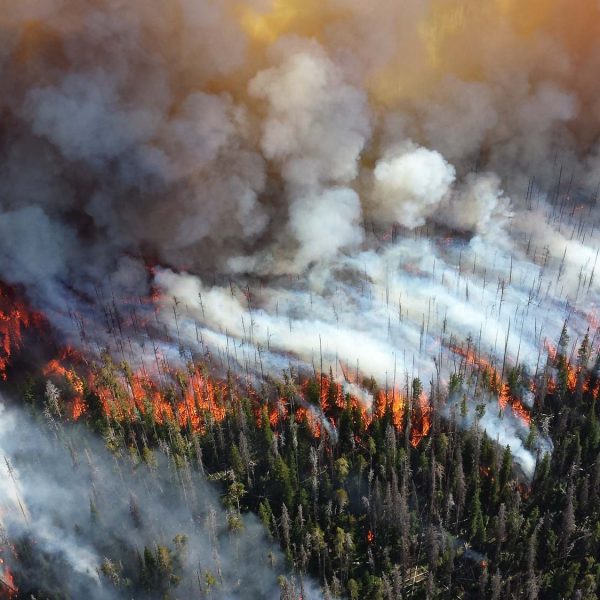
Extreme Wildfire Events a major threat for the whole Europe, mainly due to the consequences of climate change. The areas affected by the phenomenon are experiencing fires that break records in terms of burnt area, speed, behaviour and impacts t, and places that weren’t hit so far are likely to become fire-prone regions in a few years, experts say.

That’s why the European Commission is investing major resources to come up with new models and approaches to address the problem. Today, fire-res.eu goes online, which was financed within this framework.

FIRE-RES – which stands for “Innovative technologies and socio-ecological-economic solutions for fire resilient territories in Europe” – runs from December 2021 till the end of 2025. Its goal is to make Europe resilient in the face of Extreme Wildfires Events, by developing a stream of innovative actions. All this by taking into account the unfolding of such events on multiple levels, such as a better understanding of extreme wildfires’ behaviour and drivers, their impact on landscape and local economy and communities, while aiming at devising appropriate emergency management strategies and tools that lead to a better governance, society resilience and risk awareness communication.

To do this, 34 innovative actions will be tested throughout 11 small-scale environments called Living Labs, that will take place in a broad gradient of regions across Europe and beyond. They will be located in Nouvelle Aquitaine (France), Bulgaria, Canary Islands (Spain), Catalonia (Spain), Galicia (Spain), Germany-the Netherlands, Greece, Norway-Sweden, Portugal, Sardinia (Italy) and Chile. Each of them will see collaborations between the public sector, scientific communities, private companies and citizens’ associations. The strategies and actions implemented on a local or regional level will then be up-scaled in order to make them a governance tool, applicable on a continental level in a wide variety of conditions.

FIRE-RES is expected to help reduce the number of human losses, as well as the negative impacts on buildings, land, ecosystems and health, caused by wildfires in Europe. In doing so, the project will also contribute to achieving the European Union’s targets for 2030.

Behind FIRE-RES is a consortium of 34 partners from 13 countries featuring universities, research centres, emergency-response bodies, tech companies, industry and civil society organisations, coordinated by the Forest Science and Technology Centre of Catalonia, Spain.

The project has received €19.8m funding from the European Horizon 2020 research and innovation programme under grant agreement No 101037419.

Post navigation

Previous PostPrevious
Next PostNext

Archieves

  • January 2026
  • November 2025
  • June 2025
  • May 2025
  • March 2025
  • Categories

  • Bioeconomy
  • Associate members
  • Members
  • Recent Posts

    • Webinar – Let’s Talk About Planted Forests – 27 February 2026
    • Introduction of the pinewood nematode in France: what can research do?
    • Planted Scots pine: using improved material without losing the genetic base
    • FIRE-RES: A collective effort to strengthen resilience to forest fires in Europe and the Landes de Gascogne region
    • IEFC, the network for planted forests at the heart of all forestry networks

    Search

    ©IEFC Copyright ©2025 Tous droits réservés